Opting for fertility treatment is a tough decision. It becomes all the more confusing when you have to consider which treatment is the right one for you as there are many different types of treatment available.
In Vitro Fertilization (IVF) and Intracytoplasmic Sperm Injection (ICSI) are two of the most used fertility treatments and the main difference between them is the way the eggs are fertilized by the sperms.
It is always better to do some research before choosing any treatment. Further, many patients get confused between IVF and ICSI as they are not sure which will work for them better and what are their pros and cons.
Mumbai, the financial capital of India is also at the forefront of the medical sector. It has some of the finest and world-acclaimed hospitals and top doctors. Also, when it comes to assisted reproductive techniques, it is on par with the best in the world. It practices all the latest development in this field and many fertility clinics in Mumbai are equipped with the latest technology and infrastructure.
The IVF clinics in Mumbai cater to people not only from all over India but a lot of international patients prefer getting their treatment here. In terms of treatment, cost, success rate, accessibility, and safety no other city in India can beat Mumbai.
Now, let us understand the difference between IVF and ICSI.
IVF –
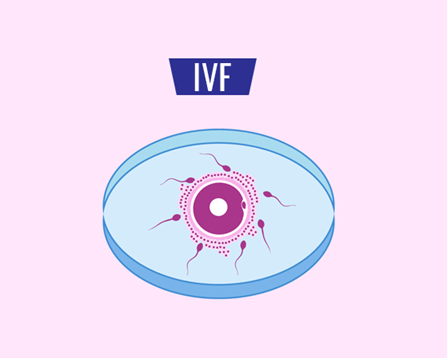
In IVF, your eggs are fertilized by placing them with the sperm in the petri dish. They will naturally penetrate the eggs leading to fertilization. The fertilized eggs are called embryos. These embryos are developed in the incubator for 3 – 5 days before transferring to your uterus. The embryologist will choose the best embryo for the transfer.
ICSI –
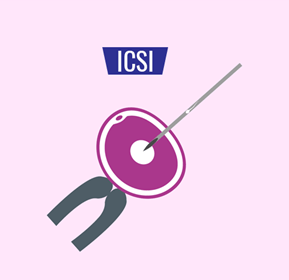
Whereas in ICSI, a single sperm is directly injected into each egg for fertilization. The resulting embryos are then transferred to the uterus after a period of 3 to 5 days.
Difference between the methods
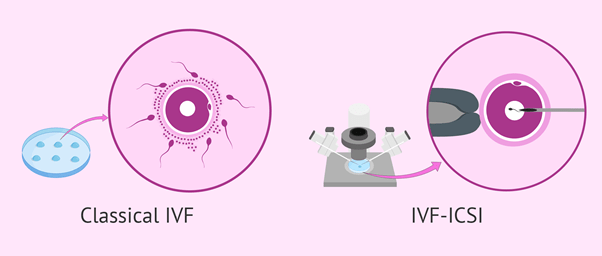
The basic process of both these methods is the same except the ways the eggs are fertilized. The patients will have to undergo tests and scans, take injections and hormonal medications for superovulation, undergo egg retrieval process, and finally embryo transfer.
When it comes to fertilizing the eggs, in IVF the sperms are mixed with the eggs and left to fertilize naturally. And in ICSI, a micromanipulator is used by the embryologist to inject a single sperm in an individual egg. ICSI is a lot more intricate method that requires experience, expertise, and a lot more skills and training.
Luckily, most of the IVF clinics in Mumbai are well-versed with both these techniques and offer it to the patients.
Now the question arises, when should one opt for ICSI and not IVF?
As explained earlier, ICSI is a more advanced and intricate assisted reproductive technique. The fertility specialist recommends ICSI in the following cases:
- When previous cycles of IVF have failed
- The male partner has a very low sperm count
- When there is zero sperm count
- In cases where the sperm have an abnormal shape or low motility
- The fertilization rate is below the mark
- If using frozen sperm
- If embryo testing needs to be done like PGD
The common facts about IVF and ICSI
- Both IVF and ICSI have good success rates. If an embryo is formed whether through IVF or ICSI it does not matter as their implantation rates are the same.
- If you have male fertility issues then you have no option but to opt for ICSI. But if that is not a problem, then you need to understand which option is better for you.
- Some clinics do not prefer ICSI as they feel the eggs will be harmed when the sperm is injected into them mechanically. However, that’s not true as the egg damage rates are below 2% in ICSI. But it is important that the embryologist is highly experienced and skilled. The IVF clinics in Mumbai have highly qualified fertility specialists and embryologists who have the experience of handling complicated cases with ease.
Which is better IVF or ICSI?
Technically, both IVF and ICSI are good treatments and millions of couples have benefitted from both of them. However, in the case of older women, the fertility specialist recommends ICSI as they have poor ovarian reserves and limited eggs.
Also, in ICSI they can access the quality of the eggs in detail as the eggs have to be denuded before the procedure.
Further, some men with normal sperms have total fertilization failure due to which the sperm cannot fertilize an egg during the IVF cycle. Thus, the whole cycle fails and they need to start a new cycle.
So, in some cases, ICSI is a better treatment option than IVF.
Whichever method you choose, why should you undergo it in Mumbai?

- Fertility Clinics – Mumbai has plenty of fertility clinics that are fitted with the latest equipment and technology. There are many IVF centres in Mumbai that have been providing its services to people for a couple of decades.
- Fertility Specialists – An experienced doctor plays an important role in making your journey a success. It is always preferred that the gynaecologist is an accomplished fertility specialist who is well versed with the latest developments in this field.
Fortunately, Mumbai has several top fertility specialists who have etched a name for themselves and have received recognition for their selfless service.
- Affordable cost – Fertility treatments do not come cheap especially IVF, ICSI, and surrogacy. Further, there is no guarantee that you will conceive in the first treatment itself. Due to this many people avoid going to the doctor. However, Mumbai offers IVF and other fertility treatments at a very competitive price.
- Advanced fertility treatment – Apart from IVF and ICSI, Mumbai also offers a wide range of the latest fertility treatments such as IUI, IMSI, FET, LAH, donor sperm insemination, and surrogacy.
If you want to get your infertility treatment done in Mumbai, visit ClinicSpots to know more about the doctors, infertility centres as well as the cost of the treatments in Mumbai.
 Your Health